
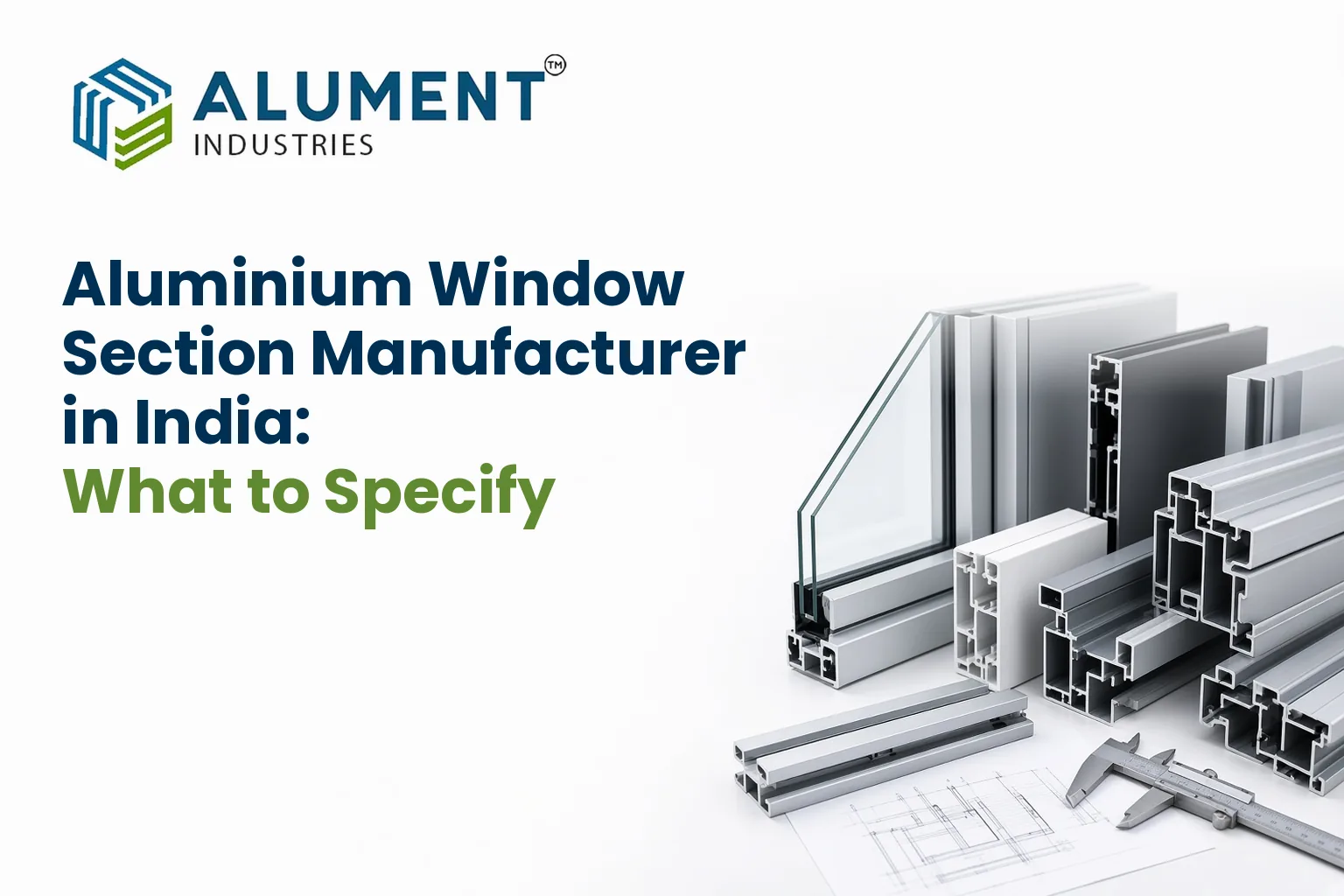
Two window frames can be cut from the exact same technical drawing and still perform entirely differently in practice. One operates smoothly for over a decade, while the other jams during the first heavy monsoon or arrives deeply scratched before installation even begins. That performance gap largely traces back to how the extrusion profile was originally defined.
When sourcing from an aluminium window section manufacturer in India, a comprehensive and precise technical specification sheet protects your project far better than securing a slightly lower price per kilo. Defining alloy grades, temper standards, wall thickness tolerances, and surface finish requirements upfront eliminates supplier ambiguity. Here is what to include in your specification sheet to ensure long-term durability and batch consistency.
A Window Is a System, Not a Single Profile
A window isn’t one section. It’s a frame, shutters, interlocks, tracks, gaskets, hardware and glass, all meant to work together. Each part of the system relies on the others being the right size and shape.
That’s why mixing profiles from different sources is risky. A shutter section that’s slightly off will sit loose in its frame, and no amount of adjustment fixes a mismatched interlock. Plan the whole window first, then specify each section against it.
Series: Settle the System First
A series is the family of sections designed to work together, with a set depth and a matching list of hardware and glass. Choosing it is the biggest decision, so make it early.
Think about the window’s size, the weight of the glass, how much wind and rain it will face and what hardware you plan to use. Then ask the manufacturer which series they can make and whether the matching sections come from the same source. Keep one series across a project. Changing it halfway is the quickest way to end up with parts that almost fit.
Wall Thickness: Where Strength Meets Cost
Thicker walls make a section stiffer and give screws more to bite into. They also use more metal, which usually adds to the cost. Walls that are too thin can flex, bow under glass weight or let hardware work loose over time.
Instead of asking for “heavy” or “light,” state the thickness you want and the tolerance you’ll accept, and match it to the window’s size and exposure. Ask the manufacturer to confirm in writing what they’ll supply. A vague answer here causes trouble later.
Finish: Look and Lifespan
Typical routes are leaving the section as extruded, anodising and powder coating. Each looks different and wears differently, so choose by where the window will live. Humid or coastal air asks more of a finish than a dry inland site.
Ask to see the finish on your own section, not on a showroom sample. Ask how colour is kept the same from batch to batch, since mismatched shades show up fast when windows sit side by side. And ask how finished sections are protected in packing. A scratched finish is a finish you’ve already paid for twice.
A Compatibility Checklist
Before approving any aluminium window profile, evaluate how seamlessly it integrates with surrounding hardware and structural components:
Gasket and Weather Strip Grooves
Verify that seal channels accommodate standard EPDM rubber gaskets and weather stripping tightly, ensuring effective water resistance and air draft prevention.
Glass Thickness Allowance
Confirm the profile rebate accommodates your specified single, double, or laminated glass units alongside necessary setting blocks and glazing beads.
Hardware Cutouts and Routing Slots
Check that predefined slots for roller assemblies, multipoint locks, flush latches, and handles align precisely with standard hardware dimensions without compromising frame strength.
Corner Joint Assembly
Inspect how corner cleats, crimping tools, or mechanical fasteners join profile ends to ensure rigid, watertight, and perfectly square frame corners.
Profile Interlocking and Fit
Ensure precise tolerances where the outer frame, sliding shutter, and vertical interlock profiles meet to prevent operational binding and air leakage.
If a manufacturer cannot answer these technical points, they likely have not considered how the complete window system functions during installation.
Quality Checks Before Dispatch
Sections can be dimensionally right and still hard to assemble. Ask what’s checked before they leave:
- Straightness and twist along the length
- Key dimensions at the points where parts meet
- Finish uniformity, in daylight
- Cut lengths, if you’ve ordered them cut
- Labelling and bundling
Then ask what happens when something fails. Is it reworked, scrapped or sent anyway? The answer tells you a lot.
Existing Profile or New Die?
Many projects can use a section the manufacturer already makes, which saves time and tooling cost. A new design needs a new die, plus trials before production. Ask what profiles are already available and what a new one would involve. If you want to understand why sections vary the way they do, how an aluminium extrusion plant in Gujarat works is a useful background read.
Does Location Matter?
If you’re searching for an aluminium window section manufacturer in Gujarat, or an aluminium window section manufacturer in Ahmedabad specifically, the practical benefit is being able to visit, see the plant and check sections in person. That helps. It doesn’t replace the questions above, which apply to any supplier anywhere.
A Specification Sheet You Can Consider
- series and section names or drawings
- wall thickness and tolerance
- finish and colour reference
- cut length or standard length
- quantity, repeat expectation and target date
- delivery location
- a physical sample for any new section or finish
Collaborate With Alument Industries
Alument Industries is an aluminium extrusion business in Gujarat. To discuss a window section requirement, send your series, thickness, finish and quantity through the contact page.
Frequently Asked Questions
What should I specify when ordering aluminium window sections?
The series, wall thickness, finish, lengths, quantity and delivery date. Add drawings, and ask for a sample of anything new.
How do I make sure sections fit my hardware?
Share your hardware details and glass thickness, and ask the manufacturer to confirm in writing that the section accepts them.
Do I need a new die for a custom window section?
Usually yes. A standard section may already suit you, so ask what profiles the supplier already has.